

By Osman Celiker, Chief Executive Officer, IRTH Group
A perspective on the future of workplace design and commercial real estate.
For decades, commercial real estate has been measured by three things: location, floor area and technical specification. Those factors still matter. Yet on their own they no longer explain what makes a workplace valuable, or why some spaces draw people in while others, on paper just as impressive, do not.
The reason is simple: the people using these buildings have changed faster than the buildings themselves. I believe the next chapter of our industry will be defined by human behaviour rather than buildings, and today’s market evidence increasingly supports that conclusion.
The Market Is Already Rewarding Better Experiences
This is not abstract. In Dubai, one of the world’s most competitive commercial markets, prime office vacancy stood at just 0.7 percent in the first quarter of 2026, while Grade A office rents increased 19 percent year-on-year, according to JLL. The firm describes this as a flight to quality—a clear shift towards workplaces that offer richer, more engaging experiences rather than simply providing office space.
The same behavioural shift is evident globally. Gensler’s 2025 Global Workplace Survey, which gathered responses from more than 16,800 office workers across 15 countries, found that only 14 percent of respondents preferred a traditional corporate workplace. Instead, today’s workforce is seeking environments that encourage collaboration, wellbeing and meaningful human interaction. As Gensler concludes, design is no longer the backdrop—it has become the engine of performance, engagement and loyalty.
The question for our industry is therefore no longer how do we build another office?
It is:
How should a workplace make people feel?
Experience Is Now the Business Case
None of this is theoretical.
Employees working in great workplaces are almost three times more likely to remain with their organisation, while 90 percent of those who enjoy their workplace say they are proud of their company, compared with just 47 percent of employees who feel disconnected from their working environment.
At the same time, Gensler’s research shows that two-thirds of employees now adapt or improvise their own workspace to compensate for what the building itself fails to provide. That gap represents one of the greatest opportunities facing commercial real estate today.
Designing Around Human Behaviour
At IRTH, every project begins with people, not buildings.
We invest time understanding how people will live, work and connect in the decades ahead because we believe great places are created by responding to human behaviour rather than simply following market trends.
As I often ask our team:
“What would a next-generation workplace destination look like if it were designed around people first?”
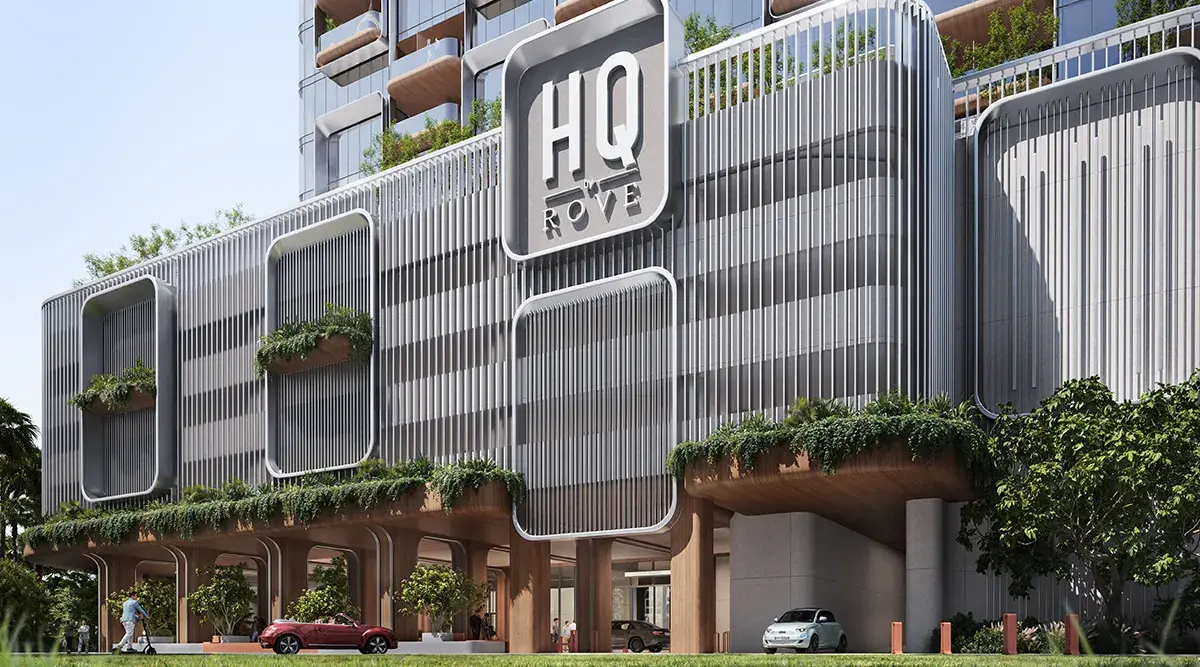
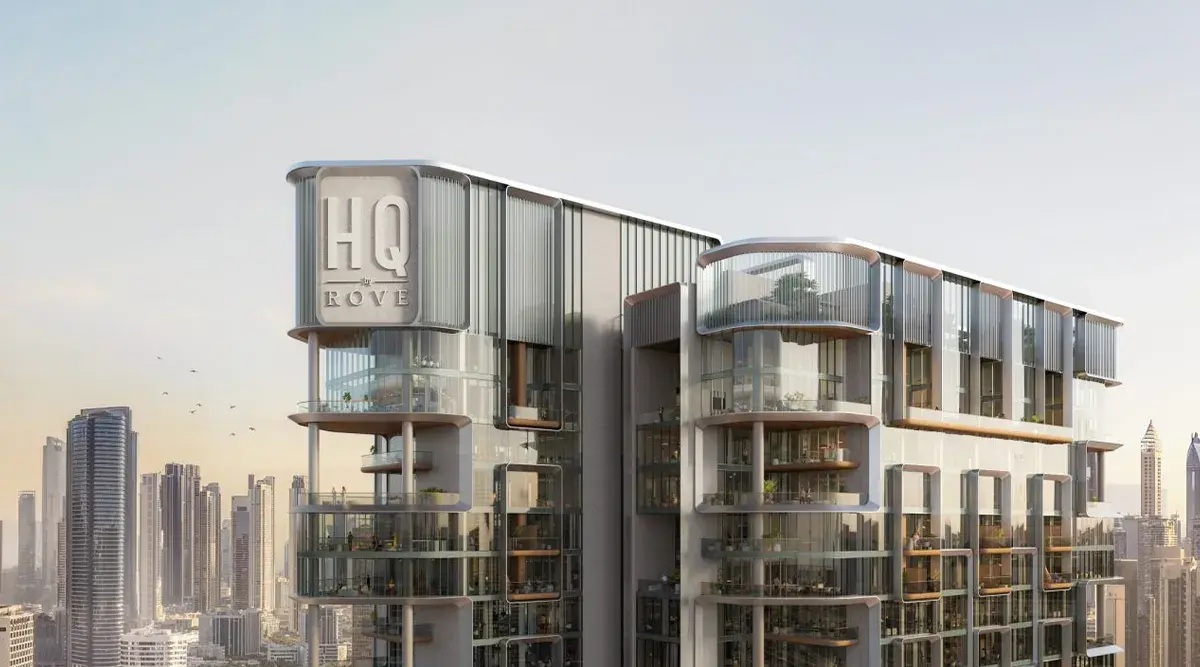
That question became the starting point for HQ by Rove, our workplace destination developed in partnership with Rove Hotels on Marasi Bay Marina in Business Bay.
Rather than treating hospitality as an added service, we made it the organising principle behind the entire workplace experience.
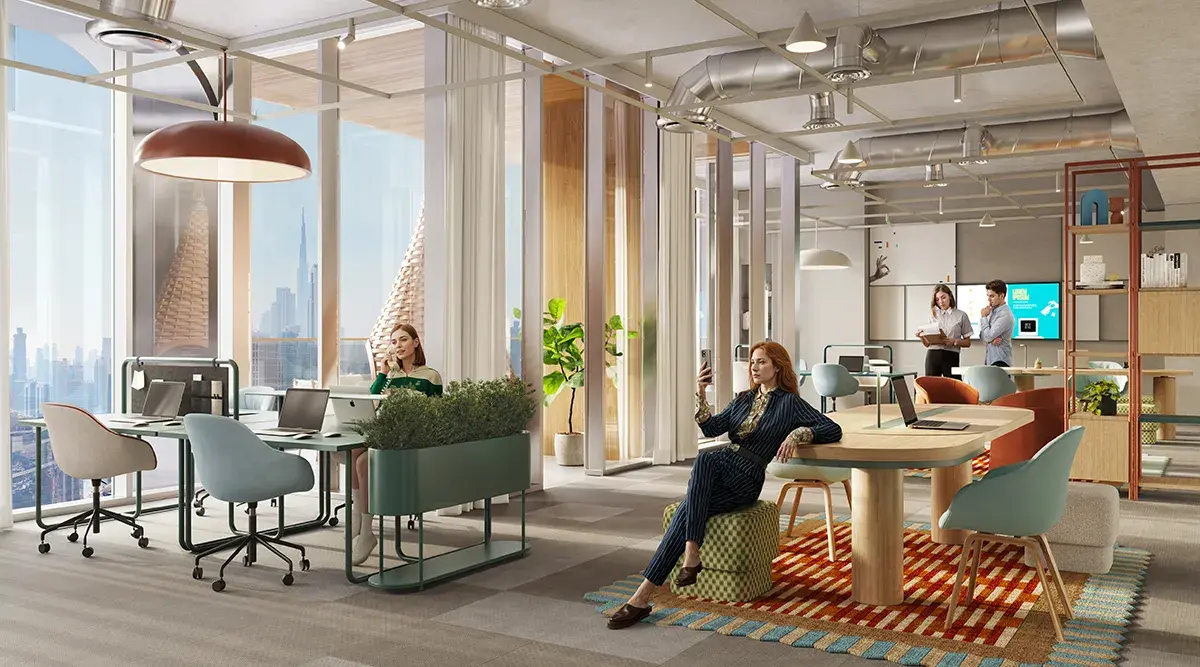
Every element-from Upresso, our first-of-its-kind vertical café integrated into the elevator journey, to floating treehouse cabins, The Block food hall, wellness spaces and rooftop work pods-was conceived to encourage connection, creativity and meaningful interaction beyond the traditional office environment.
Because some of the best conversations never happen inside a meeting room.
They happen between meetings.
They happen while sharing a coffee.
They happen when people genuinely enjoy being where they work.
Extending Hospitality Through Intelligence
Designing around people also means recognising that the modern workplace extends well beyond the physical environment.
From the very beginning, one of our commitments at HQ by Rove has been to provide every business owner with a virtual assistant to help simplify the demands of everyday business life. As artificial intelligence continues to reshape the way we work, we see an opportunity to take that commitment significantly further.
Our ambition is to create an AI-powered workplace companion that quietly supports the daily rhythm of business-helping occupants manage meetings, organise schedules, coordinate services, anticipate routine needs and reduce the countless small tasks that consume valuable time throughout the day.
For us, this is where technology becomes truly meaningful. Not when it is introduced for its own sake, but when it quietly removes friction from everyday life.
Just as hospitality anticipates a guest’s needs before they are expressed, we believe AI should do the same for the workplace.
Rather than replacing the human experience, intelligent technology should enhance it-allowing business owners and their teams to spend less time managing routine tasks and more time creating, collaborating and growing their businesses.
That, to us, is the next evolution of hospitality in the workplace.
Building for Lasting Value
If human behaviour becomes the starting point, value must also be measured differently.
For us, success extends far beyond occupancy rates or transaction values.
It is measured by whether the places we create remain meaningful, relevant and genuinely enjoyable for decades to come.
A building can retain its address and technical specification yet still lose its relevance if it no longer serves the people inside it.
Buildings may be completed in a moment, but their relevance is tested every day thereafter.
Designing for longevity therefore begins with understanding human behaviour.
The Opportunity Ahead
This is what makes the present moment so exciting.
For too long, our industry has treated experience as a finishing touch-something introduced only after the important decisions around structure, specification and cost had already been made.
The evidence now suggests the opposite.
Experience is no longer an addition.
It is the decision.
Commercial real estate has a genuine opportunity to improve people’s everyday lives, not simply to accommodate where they work.
Those developers who choose to lead with people rather than convention will define the next generation of workplaces.
The workplace has changed.
The developments that endure will not be the ones with the greatest amount of square footage or the longest list of technical specifications.
They will be the ones designed for what comes next,
where thoughtful design, hospitality and intelligent technology work together to create workplaces centred around experience, wellbeing and, above all, people.
Because the future of real estate will not be defined by the buildings we construct.
It will be defined by the people who choose to spend their lives inside them.